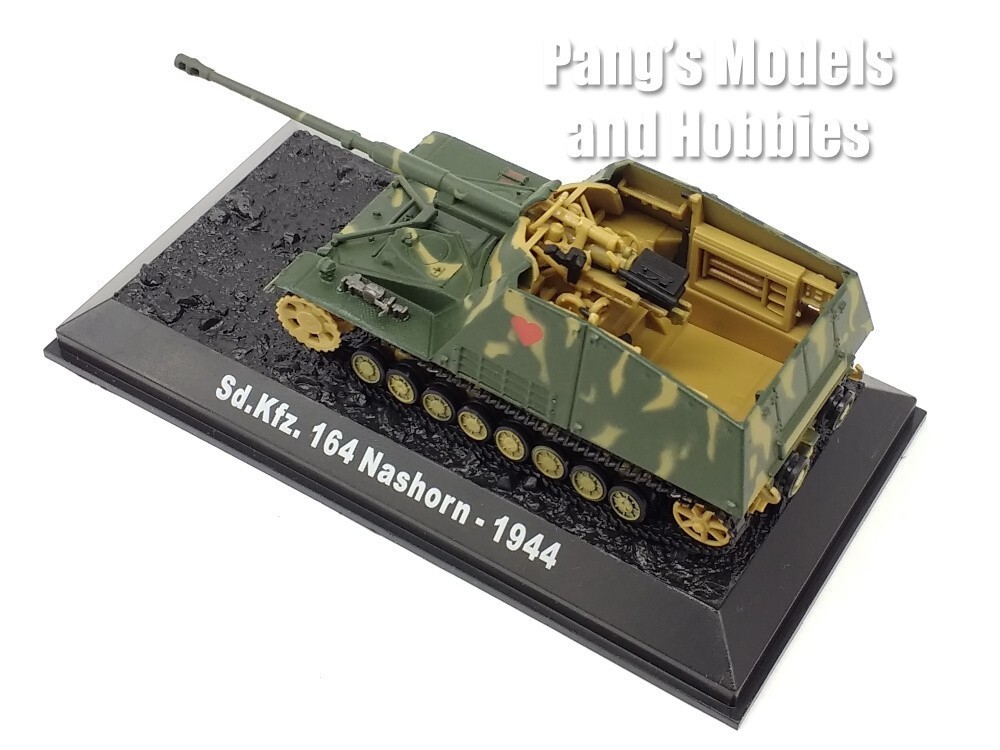
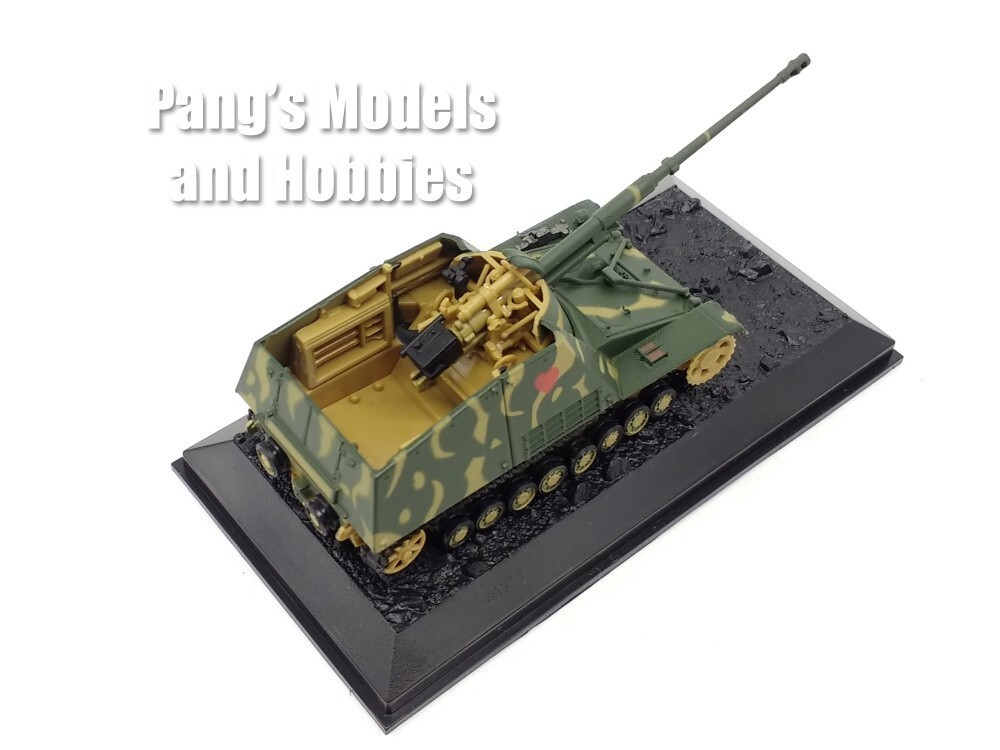
164 Nashorn German Tank Hunter, Eastern Front 1944 - 1/72 Scale Diecast Model
$41.61 CAD
(It may be possible to pay only $26.42 instead of $29.69 when you
use your bCredits at checkout)
$42.03 CADMore info
This item is selling for $42.03 CAD on eBay.
Leveraging Bonanza's low selling fees, the seller has chosen to use their savings to give Bonanza buyers a better deal.
Sign up and get $15.00 bCredits free to use at checkout and another $5.00 bCredits when you make your first purchase.
More info
To learn more about bCredits, please click again on the icon or click here
Ships from
United States
Share & earn! Sign in, share this or any listing, and you’ll get commission when it sells.
Learn more
1:72 Scale Metal Diecast ? 164 Nashorn Tank Hunter Eastern Front 1944, German Army - Length: 4.5" (from back of tank to tip of gun), Width: 1.75?
This model's body is made of metal while the turret is made of plastic. The tracks are made of rubber and are fitted, however they do not move. The coloring and markings are accurate and realistic.
The maker of the model, Amercom, really did a good job with the model, the panel lines and details are very clear and crisp. These models have different details engraved such as doors, hatches, panels, lights, ports, antennas, machine guns, ropes, shovels, etc; all of these done with high accuracy and proportion. When they are painted in different color, say for example, shovels and ropes, they are indeed painted accurately.
These models come in very basic packaging, consisting of a transparent blister pack. The model itself is attached (via screws) to a plastic base which is made to look as rough terrain. The base measures about 5.5 inches by 2.5 and at one side of the base is some info about the model such as the type of tank, the outfit it belongs and the time period it served.
This is not a toy. Recommended for 15 and up.
Nashorn German for "rhinoceros", initially known as Hornisse (German "hornet"), was a German Panzerjager ("tank hunter") of World War II. It was developed as an interim solution in 1942 by equipping a light turretless chassis based on the Panzer III and Panzer IV tanks with the 8.8 cm Pak 43 anti-tank gun. Though only lightly armoured and displaying a high profile, it could penetrate the front armour of any Allied tank at long range, and its relatively low cost and superior mobility to heavier vehicles ensured it remained in production until the war's end.